Chimney Repointing
Repointing, Flaunching, Cowls and Capping — What's What?
A chimney stack has several failure points, and repointing is only one of them. Understanding which your stack needs is the difference between a lasting fix and a repeat problem. We assess all of these at survey and itemise them so you can see exactly what you're paying for.
Repointing is renewing the mortar joints between the bricks. On the exposed upper section of a stack, decades of weather erode the mortar until water penetrates the brickwork and tracks down into the roof and chimney breast. Repointing with the correct mortar — lime mortar on pre-1919 stacks, not hard cement — restores the weather seal without trapping moisture in the soft historic brick.
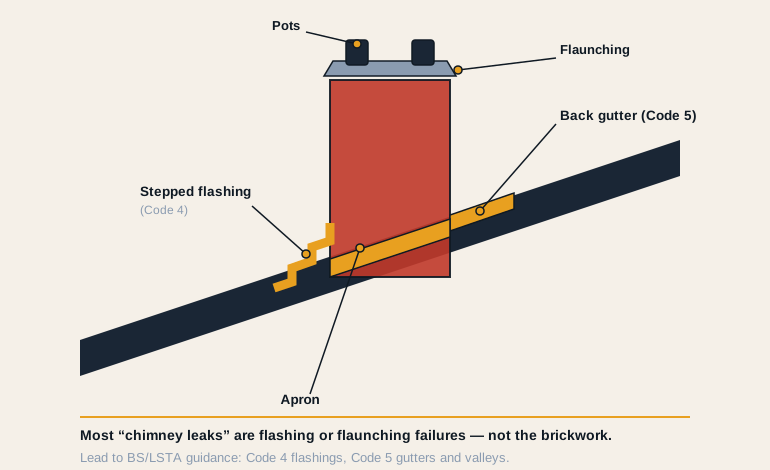
Flaunching is the mortar fillet that beds the chimney pots and sheds water off the top of the stack. It cracks and crumbles with age, letting water sit around the pot bases and soak into the stack. Re-flaunching is one of the most common and cost-effective chimney repairs. Cowls fit to the pots to keep out rain and birds and improve draught on working flues. And where a chimney is redundant, capping it — sealing the top while maintaining ventilation to prevent condensation — is often the sensible long-term answer.
Ipswich Chimney Stacks — Why They Fail Here
Ipswich has one of the highest densities of original Victorian and Edwardian chimney stacks in the East of England, and their condition is a defining roofing issue across the town's older streets.
The Victorian stack density
The residential streets around Christchurch Park, along Norwich Road, through the Fonnereau Road area and across the California and Bramford Road terraces are lined with properties that still carry their original chimney stacks — often multiple stacks per property, whether or not the fireplaces below are still in use. These stacks are now well over a century old, and their mortar and flaunching are frequently at the end of their life.
Exposure on the flat Suffolk landscape
Ipswich sits in an exposed position with little to shelter it from the easterly weather coming off the North Sea. Chimney stacks are the most exposed part of any roof — they stand proud of the ridge and take the full force of wind-driven rain. The prevailing weather face of a stack erodes fastest, which is why repointing is often needed on one face long before the others. We assess all faces and prioritise the exposed side.
The Victorian mortar era
The original stacks were built with lime mortar, and the correct repair uses lime mortar to match — NHL 3.5 on most Ipswich Victorian stacks. Hard modern cement, which cowboys often use because it's quicker, traps moisture in the soft Victorian brick and causes the brick faces to spall and crumble. Getting the mortar right is the single most important detail in a lasting chimney repair on Ipswich's period stock.
The redundant-stack question
Many Ipswich homeowners have chimney stacks serving fireplaces that are no longer used. A deteriorating redundant stack is a recurring maintenance cost and a persistent leak risk for no benefit. Capping it properly — sealing the top while keeping the flue ventilated to prevent internal condensation — often makes better economic sense than repointing a stack you'll never use. We'll give you the honest options rather than defaulting to the biggest job.
Lime mortar, not cement, is the correct specification for repointing pre-1919 masonry, as hard cement traps moisture and causes spalling damage to soft historic brick — a critical detail on Ipswich's Victorian chimney stock.Historic England guidance on the repointing of historic masonry