Flat Roof Cost
GRP, EPDM or Felt — Which Flat Roof System?
There are three flat roofing systems worth considering in Ipswich, and the right one depends on the roof size, shape and how exposed it is. Getting the system right matters more than shaving a few pounds off the price, because a flat roof that fails early costs far more in internal damage than it ever saved.
GRP fibreglass is laid wet and cured to a single seamless surface with no joints to fail. It is the standard choice for extensions and garages, handles foot traffic well, and carries a design life of 25 years or more. The one constraint is that GRP needs dry, warmer conditions to cure properly — which is why we schedule GRP work outside the cold snaps that hit Suffolk in winter.
EPDM rubber is a single sheet adhered at the edges, ideal for larger, simpler roof areas. It copes with temperature extremes well and installs faster on big spans. Modern torch-on felt is the budget option — a genuine improvement on the old pour-and-roll felt, but with a shorter service life. On exposed dockside and waterfront flats we lean toward EPDM or high-spec GRP because the wind uplift and driving rain off the Orwell are unforgiving of anything marginal.
Flat Roofing Across Ipswich — Where and What
Flat roofs turn up all over Ipswich, but the type of property and its exposure change what we recommend and what it costs.
Rear extensions on the suburban stock
The single most common flat roof in Ipswich is the rear kitchen or utility extension on the 1930s and post-war housing across Rushmere St Andrew, Whitton and the Chantry area. These are small, simple roofs — usually 8–20 m² — where GRP is the natural fit. A typical single-storey rear extension flat roof in this bracket runs £1,200–£3,000 depending on size and whether there is a parapet or upstand detail to dress.
Garages and outbuildings
Detached and integral garages across the estates carry ageing felt roofs that are now well past their life. Re-covering a standard single garage in GRP or EPDM typically costs £800–£1,800. These are often the roofs homeowners leave until water is coming through — catching them earlier keeps the deck sound and the price down.
Waterfront and dockside flats
The regenerated waterfront and the older dockside conversions carry larger flat roof areas that take the full force of the weather coming up the Orwell estuary. Exposure here is a genuine engineering factor — wind uplift at the perimeter and standing water in poorly-falled areas are the two failure modes we design against. On these we specify EPDM or high-spec GRP with proper falls and robust perimeter fixing, and price per m² accordingly.
Dormers and flat-roofed dormers
Loft conversions across the Victorian and 1930s stock frequently have flat-roofed dormers. These small, high, awkward-access roofs are prone to leaking at the junction with the main pitched roof. GRP with proper leadwork or a dressed upstand at that junction is the durable answer — a common repair and re-cover job that runs £600–£1,800 depending on size and access.
Why falls matter in Suffolk
The one detail that separates a flat roof that lasts from one that fails early is drainage. A flat roof is never truly flat — it must be laid to a fall so water runs off. In Ipswich's climate, with heavy autumn rain and the occasional intense summer downpour, ponding water on an under-falled roof is the fastest route to membrane failure. We build in adequate falls as standard, which is why our flat roofs outlast the bargain jobs.
Insulation and building regulations on Ipswich flat roofs
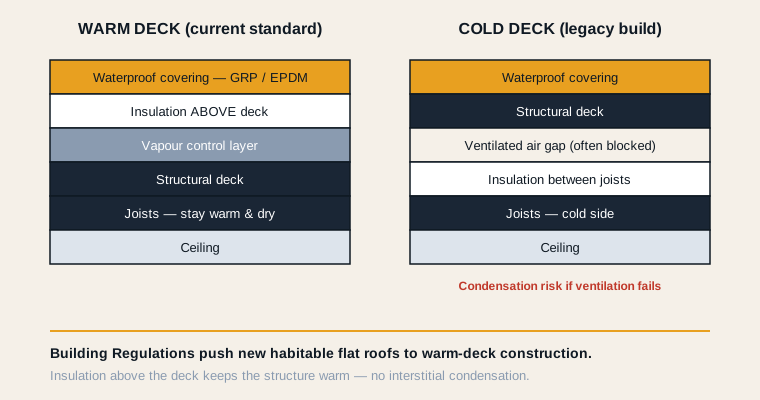
One factor that catches Ipswich homeowners out on flat roof cost is building regulations. When you replace more than half of a flat roof, the work usually has to bring the roof up to current insulation standards — which means adding insulation as part of the re-cover, either above the deck (warm roof) or within it. This adds to the cost but genuinely improves the room below, and it's not optional where it applies. A quote that ignores it either doesn't understand the regulations or is planning a job that won't comply.
On the many Ipswich extensions with habitable rooms below the flat roof, a warm-roof build-up is usually the right approach — it keeps the insulation continuous and avoids the condensation problems that plague cold-roof designs. We factor the correct build-up into the quote and, where notifiable, handle the building control side. It's the difference between a flat roof that just sheds water and one that also keeps the room beneath it warm and dry.
A final word on false economy: the cheapest flat roof quote in Ipswich is almost never the best value. Flat roofing is unforgiving of shortcuts — inadequate falls, skimped upstands, or a bargain felt where the exposure demanded EPDM all fail early and take the ceiling below with them. We price honestly for a roof that lasts its full design life, which over twenty years costs far less than replacing a bargain roof twice.
Flat roofs should be laid to a minimum finished fall of 1:80 to ensure positive drainage and prevent ponding, which is a primary cause of premature membrane failure.BS 6229 Flat roofs with continuously supported flexible waterproof coverings