Roof Repair Cost
What Determines the Cost of a Roof Repair?
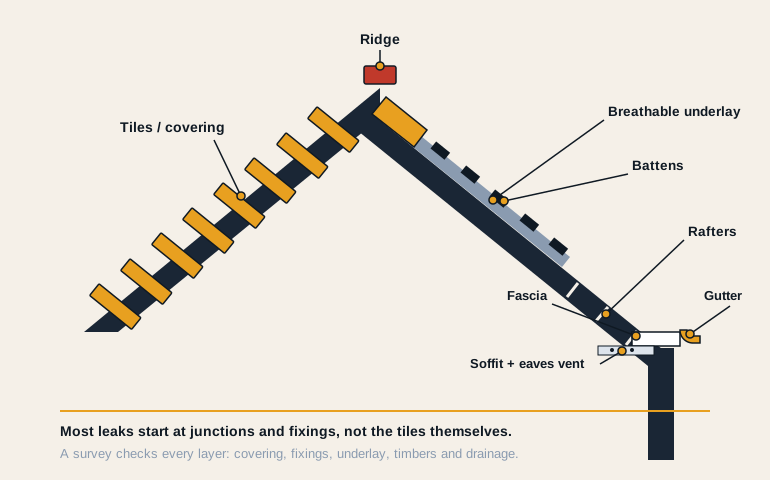
Three things set the price of any roof repair: what has actually failed, how easy it is to reach, and whether the problem is isolated or a symptom of wider deterioration. A cracked tile in an accessible spot is a quick, cheap fix. The same tile high on a steep terraced roof with no easy scaffold point costs more simply because of access.
The honest part of pricing repairs is distinguishing a genuine one-off from the first sign of systemic failure. A single slipped tile on a 1970s Whitehouse roof might be a one-off — or it might be the first of many as corroded nails let go across the whole slope. A good roofer tells you which, rather than fixing one tile today and quietly hoping you call back next month.
We assess every repair with that question in mind and give you a straight answer: fix it, or the repair is throwing money at a roof that needs recovering. Where a repair is the right call, we price it clearly with no call-out fee.
Common Ipswich Roof Repairs and What They Cost
The repair calls we get in Ipswich fall into predictable patterns tied to the town's housing stock and its exposed East Anglian position. Here is what actually comes up, and what it costs.
Slipped and cracked tiles (£150–£400)
The most common call across the town. On the concrete-tile estates — Chantry, Whitehouse, Gainsborough — slipped tiles are usually the early warning of nail sickness, and we will tell you if that is what we are seeing. On Victorian terraces off Norwich Road it is more often a genuine one-off, a tile cracked by frost or foot traffic. Access on the steeper terraced roofs pushes these toward the top of the band.
Lead valley and flashing failures (£300–£700)
The Victorian and Edwardian terraces around Fonnereau Road and the California area have valley gutters between properties and lead flashings around the party-wall parapets. These are the classic Ipswich leak points. Underspecified or fatigued lead cracks and lets water track directly into the roof. Proper code 4 or 5 lead replacement lasts decades; the sealant patches cowboys apply last one winter.
Ridge and hip re-bedding (£350–£650)
On the exposed roofs across the flat Suffolk landscape, easterly gales work at any ridge mortar that has cracked through freeze-thaw. Re-bedding a run of ridge tiles, or converting to a dry ridge system, is a frequent job on the 1930s and post-war stock. The dry ridge option costs a little more up front but does not fail the way mortar does.
Chimney and stack repairs (£200–£800)
Ipswich has a high density of original Victorian chimney stacks, particularly around Christchurch Park and along Norwich Road. Repointing, re-flaunching and flashing repairs at the stack are common leak sources. Where the stack is redundant, capping or removal may be the better economic answer — we cover that on the chimney repointing page.
The nail-sickness judgement call
The most important repair conversation in Ipswich is not about a single job — it is about whether repairs still make sense at all. On a 1960s or 70s estate roof where nail sickness has taken hold, we have seen homeowners spend £300 a year for four years re-fixing slipped tiles when a £7,000 re-roof would have ended the problem and added value. When the maths tips, we say so.
Access — the hidden cost driver across Ipswich
The same repair costs different amounts depending on where in Ipswich the property is, and access is usually why. A cracked tile on a bungalow in Kesgrave is a ladder job; the same tile high on a three-storey Victorian terrace off Fonnereau Road needs a scaffold tower or a proper access plan, which adds cost before a single tile is touched. On the narrow terraced streets around the California and Bramford Road areas, resident parking and tight frontages complicate access further, and skip permits through Ipswich Borough Council add a small but real cost to bigger repairs.
This is worth understanding because it explains why an honest roofer's prices vary and why a suspiciously cheap quote on an awkward-access roof is a warning sign — someone is either cutting a safety corner or planning to add the access cost later. We assess access at survey and build it into the fixed price so there are no mid-job surprises.
Finally, a note on urgency and cost: a small repair caught early almost always costs less than the same problem left to spread. A single slipped tile fixed now is a modest job; the same tile left to let water into the roof over a wet Ipswich winter can mean saturated insulation, decayed battens and a stained ceiling — turning a £200 job into a four-figure one. If you've noticed a problem, an early assessment with no call-out fee is the cheapest insurance there is.
Where corroded nail fixings affect a significant proportion of a roof, industry guidance holds that piecemeal repair is rarely economic and full re-covering is the recognised remedy — a judgement worth getting from a roofer before spending repeatedly on repairs.BS 5534 Code of Practice for Slating and Tiling